Mastering the Count: A Beginner’s Guide to Card Counting in Blackjack

Card counting is perhaps the most misunderstood concept in the world of gambling. Popular culture often portrays it as an esoteric skill requiring a photographic memory or supernatural mathematical genius. In reality, card counting is a methodical, learned skill rooted in basic probability and arithmetic. It does not predict the exact card that will appear next from the shoe; instead, it tracks the ratio of high cards to low cards remaining in the deck, giving the player a statistical advantage over the house.
Understanding the Basic Premise of Blackjack
Before diving into the mechanics of counting, you must master basic strategy. Basic strategy is the mathematically optimal way to play every hand based on your cards and the dealer’s visible upcard. Card counting builds directly upon this foundation. Without a firm grasp of basic strategy, counting cards is entirely useless because you will make suboptimal playing decisions that erase any mathematical edge you gain.
The house edge in blackjack exists because the dealer acts last. If both the player and the dealer bust, the player loses immediately. However, high cards heavily favor the player for several reasons. High cards increase the frequency of natural blackjacks, which pay out at three to two, and they force the dealer to draw more often when holding stiff hands like a twelve, thirteen, fourteen, fifteen, or sixteen, making it much more likely for the dealer to bust. Conversely, low cards favor the dealer because they help the dealer complete hands when holding stiff totals.
The Mechanics of the High-Low System
The most popular and accessible card counting system for beginners is the High-Low system. This balanced counting system assigns a numerical value of positive one, zero, or negative one to every card dealt from the shoe. As cards are revealed on the table, you keep a running tally in your head.
The system breaks down into three distinct categories:
-
Low Cards: Two, three, four, five, and six are assigned a value of positive one.
-
Neutral Cards: Seven, eight, and nine are assigned a value of zero and do not affect the count.
-
High Cards: Ten, jack, queen, king, and ace are assigned a value of negative one.
As cards leave the shoe, you add and subtract their values sequentially. For example, if a five, a jack, and a seven are dealt, your running count changes by adding one for the five, subtracting one for the jack, and adding zero for the seven, bringing your net running count back to zero. A positive running count indicates that more low cards have been played, leaving a higher concentration of high cards in the deck. A negative running count means the opposite, showing that many high cards have already been dealt and leaving the deck rich in low cards.
Running Count Versus True Count
While the running count tells you the absolute tally of points, it is not sufficient on its own when casinos use multiple decks. Most modern blackjack games utilize shoes containing anywhere from six to eight standard decks mixed together. A running count of plus eight means something entirely different in a single-deck game compared to an eight-deck game.
To normalize the count across multiple decks, card counters convert the running count into the true count. The true count represents the running count divided by the estimated number of decks remaining in the shoe. If your running count is plus twelve and you estimate that there are four decks left to be dealt, your true count is plus three.
Calculating the true count requires practice and visual estimation. You must look at the discard tray and compare it to the remaining stack in the shoe to judge how many decks are left. As the true count rises, you increase your bet sizes because your statistical advantage grows. When the true count drops or remains negative, you bet the table minimum or sit out if table conditions permit.
Adjusting Your Bets Based on the Counteractive Spread
Knowing the count is only half the battle; managing your financial exposure through proper bet spreading is what actually generates profit. A bet spread refers to the difference between your minimum bet and your maximum bet.
Beginners should start with a conservative spread to avoid drawing unwanted attention from casino pit bosses. For instance, in a six-deck game, you might bet one unit when the true count is zero or negative. As the true count climbs to plus two, you increase your wager to two units. At a true count of plus three, you move to four units, and at plus four or higher, you reach your maximum spread of six to eight units.
Consistency is crucial. If you jump your bet from the minimum to the maximum randomly without a corresponding rise in the true count, you will quickly lose money and fail to capitalize on the mathematical swings. Your bet sizing must directly reflect the true count calculation at the start of each new hand.
Essential Practice Drills for Beginners
Mastering card counting requires deliberate practice away from the casino floor until the process becomes second nature. You should be able to count down a standard fifty-two-card deck in under twenty-five seconds while maintaining a final count of zero.
-
Single Deck Drill: Shuffle a single deck, flip through the cards two at a time, and keep a running tally. When you reach the end of the deck, your final count should equal zero.
-
Distraction Training: Practice counting cards while watching television, listening to music, or having a conversation. Real casinos are loud, chaotic environments with flashing lights, clinking chips, and cocktail waitresses interrupting your focus.
-
True Count Conversion Drill: Deal out cards to simulate a multi-deck shoe, practice estimating the remaining decks, and instantly divide your running count to find the true count.
Common Pitfalls to Avoid
Even knowledgeable players can make critical errors that ruin their effectiveness at the table. Fatigue is one of the primary culprits. After hours of intense concentration, mental mistakes creep into your running count, rendering your data inaccurate. It is wise to take regular breaks rather than playing continuously for hours.
Another major mistake is letting emotional state dictate betting behavior. Card counting relies on a long-term statistical advantage. Short-term variance means you will still lose many hands even when the true count is heavily in your favor. Chasing losses or deviating from your established bet spread out of frustration will destroy your bankroll. Finally, avoid broadcasting your counting activities. Maintaining casual conversation, tipping the dealer, and acting like a standard recreational gambler helps you blend in seamlessly.
Frequently Asked Questions
Is card counting illegal in physical casinos?
Card counting is entirely legal because it relies purely on human intellect, memory, and math without the use of external mechanical or electronic devices. However, casinos are private establishments and reserve the right to refuse service, ask counters to leave, or ban them from playing blackjack entirely.
Can I use card counting strategies effectively in online live dealer blackjack?
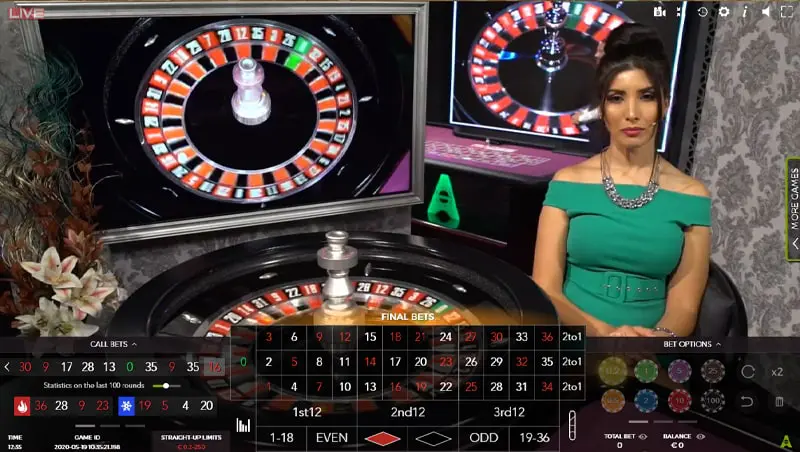
Online live dealer games make card counting extremely difficult because of deck penetration rules. Most online casinos shuffle the shoe after dealing only half of the cards, preventing players from ever reaching the high-count scenarios that provide a mathematical edge.
How large of a bankroll do I need to start counting cards?
A proper card counting bankroll must be large enough to withstand standard statistical swings without running out of money. Most professional players recommend a bankroll of at least one hundred times your maximum bet size, though a cushion of two to three hundred maximum bets is much safer for handling severe downward variance.
What happens to the count when the dealer shuffles the deck?
The moment the dealer gathers the cards and shuffles them into a new shoe, your running count instantly resets to zero. You must wait for the next deal to begin tracking from scratch.
Do I need to memorize complex deviation tables immediately?
Beginners do not need to memorize advanced strategy deviations right away. Mastering the basic High-Low system, accurate true count conversion, and standard basic strategy will cover most of your needs when starting out. Deviations can be integrated gradually as your experience grows.
How long does it typically take to become proficient at counting?
Proficiency varies depending on the individual and the amount of time dedicated to daily practice drills. Most people require several months of consistent, focused practice at home before they can execute the count accurately and quickly enough to play in a live casino environment.