How to Play Bridge: Mastering Strategy and Partnership Communication
Bridge is widely considered the ultimate card game. It is a game of logic, memory, psychology, and, most importantly, communication. Unlike solitary card games, bridge is played by four people in two competing partnerships. Success depends not only on how well you play your own cards but on how effectively you share information with your partner through a structured system of bidding. While the rules can be learned in an afternoon, mastering bridge is a lifelong pursuit that attracts millions of players to competitive clubs and social tables across the globe.
The Fundamental Structure of the Game
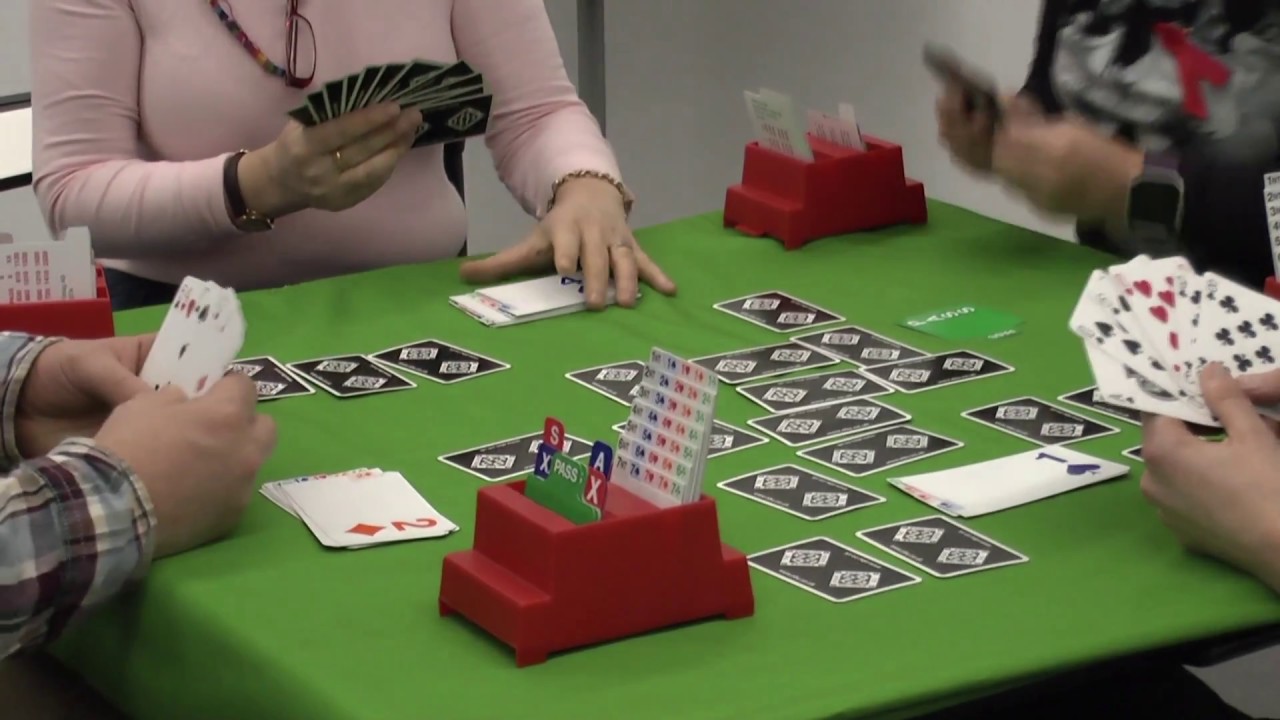
Bridge uses a standard deck of fifty-two cards. The game is divided into two distinct phases: the bidding (or auction) and the play. In the bidding phase, the four players—seated in two pairs, typically labeled North-South and East-West—compete to determine which partnership will declare the contract. The contract specifies two things: how many tricks the partnership must win, and which suit, if any, will be the trump suit.
Each player is dealt thirteen cards. The bidding proceeds clockwise, with players making calls that indicate the strength of their hands and their preferred suits. A bid consists of a number and a suit. For example, a bid of two hearts means the partnership commits to winning eight tricks, with hearts as the trump suit. The highest bid becomes the contract. The partner who first mentioned the suit of the final contract becomes the declarer, and the partner becomes the dummy. During the play phase, the dummy places their cards face up on the table, and the declarer plays both their own hand and the dummy’s hand to try and fulfill the contract.
The Art of Bidding Systems
Bidding in bridge is a secret language. Because you cannot speak openly to your partner about the cards you hold, you must use a standardized set of bids to convey your hand strength and distribution. Most beginner and intermediate players use a system known as standard American or similar variations. The core objective of bidding is to locate a fit in a major suit, such as hearts or spades, or to determine if a partnership has enough combined strength to bid a no-trump contract.
Players evaluate their hand strength using the high card point system:
-
Ace: 4 points
-
King: 3 points
-
Queen: 2 points
-
Jack: 1 point
A minimum of twelve to thirteen points is usually required to open the bidding. Beyond raw strength, shape is crucial. Having a long suit—five cards or more—or a void or singleton allows a player to add distributional points to their total. Bidding is an iterative process where partners narrow down the possibilities, eventually settling on a contract that offers the best mathematical chance of success based on their combined twenty-six cards.
Defensive Strategy and Communication
When you are not the declarer, you are on defense. Defense is often cited as the most challenging aspect of bridge because you and your partner must coordinate your efforts without seeing each other’s cards. Your goal is to prevent the declarer from taking the number of tricks required to fulfill their contract.
Defensive communication relies on opening leads and signaling. The opening lead, made by the person to the left of the declarer, is the most important defensive play. It sets the tone for the entire hand. Throughout the play, you and your partner use carding signals to share information. For example, playing a high card followed by a low card in a suit might signal to your partner that you have a sequence of high cards or that you are interested in that suit. Mastering these signals allows you to create a collaborative effort to trap the declarer.
Declarer Play Techniques
As the declarer, you have the advantage of seeing both your hand and the dummy. This allows you to plan your strategy before playing the first card. The first step is to count your sure winners and your losers. A winner is a trick you are guaranteed to take, while a loser is a trick you will likely lose to the opponents.
If the number of losers exceeds the number you can afford to give away, you must find ways to develop more tricks or get rid of your losers. Common techniques include:
-
Finessing: A tactic to win a trick with a card that is not the highest, by hoping the opponent’s high card is in a specific location.
-
Establishing long suits: Playing cards in a suit until your remaining low cards become winners.
-
Trumping in dummy: Using your trump cards to win tricks when you are out of a plain suit.
Developing a Strong Partnership
Bridge is inherently a social and cooperative game. Even the most skilled player will struggle if they are not in sync with their partner. Successful partnerships are built on trust and a shared understanding of bidding agreements. It is vital to discuss your bidding system before sitting down at the table. If you and your partner disagree on what a specific bid means, you will inevitably end up in the wrong contract.
Furthermore, bridge etiquette is paramount. The game relies on the assumption that no information is shared outside of the legal bidding and playing conventions. Maintaining a consistent tempo, avoiding facial expressions, and being polite to opponents are hallmarks of a great bridge player. Remember that mistakes are inevitable; the best pairs focus on learning from their errors rather than blaming one another.
Improving Your Game Through Practice
The beauty of bridge lies in its infinite complexity. Even professional players continue to study and refine their techniques. To improve, you should practice with bridge software, read books on bidding theory, and play in local clubs where you can learn from more experienced players. Most importantly, try to analyze your hands after the game concludes. Ask yourself if there was a better bid or a more efficient way to play the hand. Over time, these analytical habits will develop your intuition, allowing you to make complex decisions with confidence and speed.
Frequently Asked Questions
What makes bridge different from other trick-taking games like hearts or spades?
While hearts and spades are also trick-taking games, bridge is unique because of its rigorous bidding phase. In hearts and spades, the rules are often simpler and the focus is on avoiding or winning tricks without the complex partnership communication system that defines bridge.
How do I find a partner to play bridge with in my local area?
Most cities have bridge clubs affiliated with national organizations. These clubs offer beginner lessons and social games specifically designed to help new players meet partners. Online bridge platforms are also excellent for finding partners and playing games at various skill levels.
Is it possible to play bridge with only three people?
Standard bridge requires four players. If you only have three, you can play a variation called cutthroat bridge, where the fourth hand is dummy, or you can use a computer player as the fourth member. However, for the full experience and proper partnership dynamics, four live players are necessary.
Why is no-trump sometimes a better contract than a suit contract?
A no-trump contract removes the complexity of trump suits, meaning that raw high-card power becomes the primary way to win tricks. It is often mathematically superior when a partnership has balanced hands with strength across all four suits rather than a long, lopsided suit.
How are bridge tournaments structured for players of different skill levels?
Bridge tournaments use a system of master points or ratings to group players of similar experience. Beginners start in restricted sections where they play against others with similar levels of experience, ensuring a fair and educational environment.
Does luck play a significant role in winning at bridge?
Luck plays a factor in the cards you are dealt in any single hand, but over a long period, bridge is a game of skill. In duplicate bridge tournaments, every pair plays the same hands at different tables, which effectively removes luck from the equation and measures your ability to play the same cards better than others.
What are the most common mistakes beginners make when learning to bid?
The most common mistake is overbidding, which happens when players bid too aggressively without enough points. Another common error is failing to alert the partner to special bidding agreements, which leads to confusion and suboptimal contracts.