Baccarat Basics: Why This Classic Card Game Fascinates High Rollers

Baccarat has long held an aura of exclusivity and sophistication, traditionally associated with the high-stakes VIP rooms of Monte Carlo, Macau, and Las Vegas. Despite its glamorous reputation, baccarat is one of the simplest table games to play in a casino. Unlike poker or blackjack, which require complex strategies, probability calculations, and continuous decision-making, baccarat puts almost all control in the hands of rigid, predefined casino rules. Players simply place their wagers and watch the cards unfold. This combination of low house edge, fast-paced action, and massive financial swings makes baccarat an enduring favorite for high rollers worldwide.
The Core Objective and Card Values
The primary objective in baccarat is straightforward. You are betting on which of two hands will achieve a total closest to nine. The two hands are designated as the Player hand and the Banker hand. Do not let the terminology confuse you; the player hand does not necessarily belong to you, and the banker hand does not belong to the casino. You can choose to wager on either outcome on every single round.
Card values in baccarat follow a unique set of rules that sets the game apart from other card games:
-
Number Cards: Cards from two through nine retain their face value.
-
Face Cards and Tens: Kings, queens, jacks, and tens all carry a value of zero.
-
Aces: Aces are valued at exactly one point.
The scoring system has a unique twist when hands exceed a total of nine. Whenever the sum of the cards exceeds nine, the tens digit is simply dropped. For example, if a hand is dealt a seven and an eight, the sum is fifteen. Dropping the tens digit leaves a total score of five. Similarly, a hand containing a nine and a six equals fifteen, which evaluates to a score of five. Because of this rule, the highest possible score in baccarat is nine, and the lowest possible score is zero, which is commonly referred to as a baccarat.
The Ritual of the Deal and Game Flow
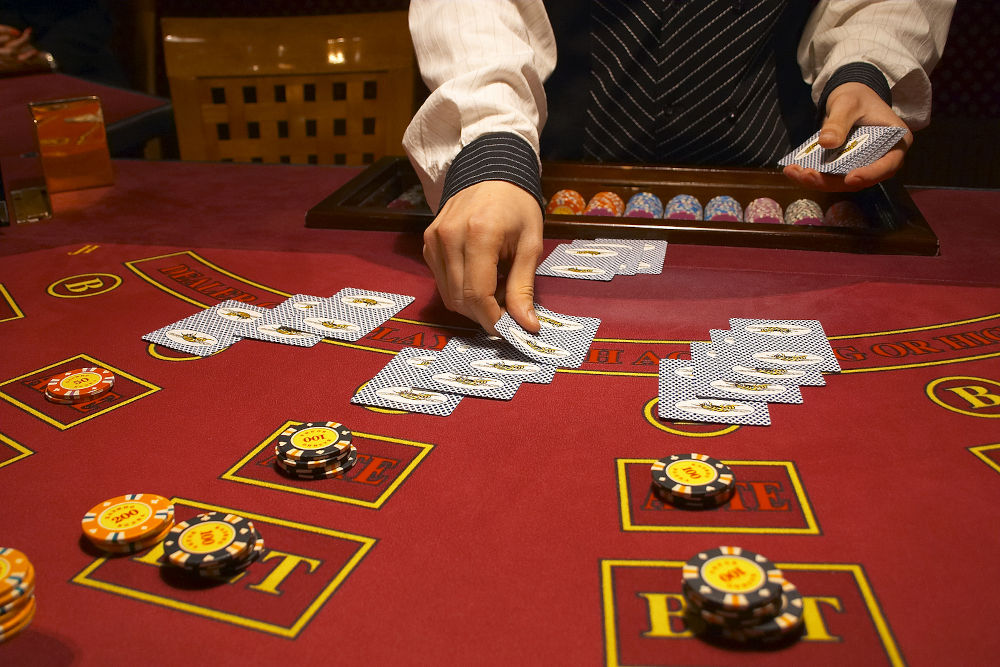
A standard round of baccarat begins after all players place their bets on either the Player, the Banker, or a Tie. Once the betting window closes, the dealer deals two cards to the Player hand and two cards to the Banker hand from a shoe containing multiple decks, typically six or eight.
Both hands are exposed, and their initial totals are calculated. If either the Player or the Banker has a natural total of an eight or a nine on the initial two cards, the round ends immediately, and no more cards are drawn. Whichever hand has the higher natural score wins. If neither hand holds a natural, a complex yet completely automated set of drawing rules, known as the table tableau, determines whether a third card must be drawn for the player or the banker. Players never make any choices regarding whether to draw; the rules govern every movement of the cards.
Understanding the Banker Rule Advantage
One of the main reasons high rollers gravitate toward baccarat is the favorable mathematical structure of the Banker bet. While the rules for drawing a third card might seem complicated at first glance, they are mathematically weighted to favor the Banker hand slightly more than the Player hand.
Because the Banker acts second and responds to the Player’s third-card draw, the Banker bet wins slightly more often than the Player bet over the long term. To balance this inherent advantage and prevent players from exclusively betting on the Banker, casinos charge a five percent commission on winning Banker wagers. Even after accounting for this commission, the Banker bet maintains a lower house edge than the Player bet, making it the statistically optimal choice for serious gamblers looking to maximize their expected return.
Breaking Down the House Edge Across Bets
Baccarat offers three primary betting options, each with a distinct mathematical profile and house edge:
-
Banker Bet: Carries a house edge of approximately one point zero six percent, factoring in the five percent commission.
-
Player Bet: Carries a house edge of approximately one point twenty-four percent, with no commission deducted.
-
Tie Bet: Carries a massive house edge exceeding fourteen percent, despite offering an enticing high payout.
High rollers focus almost exclusively on the Banker and Player bets, completely ignoring the Tie bet because of its terrible statistical expectation. While the payout for a correct tie prediction is high, the probability of it occurring is low enough to make it a poor financial proposition. Conservative money management combined with the low house edge of the Banker bet allows high-stakes players to weather short-term variance effectively.
The Psychology and Rituals of High-Stakes Tables
The physical environment of a high-limit baccarat salon differs dramatically from a standard casino pit. Casinos often cordon off private or semi-private rooms for baccarat players, creating an atmosphere of quiet concentration and luxury. Superstition and ritual play a massive role in the player experience. Casinos often permit players to physically bend, squeeze, or tear the cards as they reveal them in variations like mini-baccarat or squeeze baccarat, believing that manipulating the physical cards can change their fate.
Scorecards and trend sheets are handed out to every player at the table. Players meticulously track historical outcomes, marking down whether previous rounds were won by the player or the banker. While mathematics dictates that each baccarat coup is an independent trial with no memory of past outcomes, the illusion of finding patterns provides deep psychological comfort to gamblers wagering large sums of money.
Managing Variance with Massive Bankrolls
High rollers are drawn to baccarat because the game allows for rapid, large-scale wagering without requiring complex tactical decisions. However, high-stakes gambling involves significant variance. A baccarat bankroll must be structured to survive aggressive swings. Because the house edge is so low, players can sustain long playing sessions without experiencing rapid depletion, provided they avoid chasing losses and resist the temptation to make high-risk side bets.
Frequently Asked Questions
What is the specific role of the caller in traditional baccarat games?
In traditional full-sized baccarat tables, a casino employee known as the caller presides over the game. The caller directs the action, announces the point totals of the hands, dictates whether a third card must be drawn according to the table rules, and declares the winning hand.
How does mini-baccarat differ structurally from standard big baccarat?
Mini-baccarat is played on a smaller table resembling a blackjack layout rather than the large, kidney-shaped table of traditional baccarat. Additionally, in mini-baccarat, the dealer handles and turns over all the cards, whereas in traditional high-limit baccarat, the players take turns handling the shoe and squeezing the cards.
Why do some casinos offer a commission-free baccarat variant?
Commission-free baccarat alters the payout rules for winning Banker bets to eliminate the hassle of tracking and collecting five percent commissions after every hand. To compensate for removing the commission, these tables typically pay out only fifty percent on winning Banker bets if the Banker wins with a specific total like a six, which actually increases the house edge.
What is a dragon bonus side bet in modern baccarat?
The dragon bonus is a popular side bet that pays out not just on whether a hand wins, but on how much it wins by or if it wins with a natural. It adds volatility and higher potential payouts to the game, though it comes with a significantly higher house edge compared to the standard main bets.
Can card counting be applied successfully to baccarat?
Card counting is theoretically possible in baccarat because cards are dealt from a shoe without immediate replacement, but its practical application is extremely limited. The effect of removal is minuscule compared to blackjack, requiring massive numbers of decks and deep penetration to gain even a microscopic advantage.
Are there any skill-based strategies that can alter the outcome of a baccarat hand?
There are no skill-based decisions once a baccarat hand begins because all drawing actions are governed by strict, mandatory table rules. Strategy in baccarat is entirely limited to game selection, bankroll management, and choosing between the Banker, Player, or avoiding the Tie bet.
What inspired the creation and historical spread of baccarat?
Baccarat originated in Italy during the fifteenth century, derived from ancient tarot games, and its name translates from an old Italian word meaning zero, referring to the worthless face cards. It eventually spread to France, where it became a favorite pastime of the French nobility before evolving into the modern casino staple found worldwide today.