The Philosophy of Risk: Why Humans Are Hardwired for Gambling

Throughout human history, across every known culture and civilization, people have engaged in games of chance and wagering. From ancient Mesopotamian knucklebone dice to modern digital sports betting, the compulsion to risk valuable resources on uncertain outcomes is a defining characteristic of human behavior. This phenomenon is not merely a modern social vice or an accidental quirk of entertainment economics. Instead, the impulse to gamble is deeply embedded in human biology, evolutionary history, and philosophical constructs of free will, agency, and the pursuit of meaning.
The Evolutionary Roots of Risk-Taking Behavior
From an evolutionary perspective, taking risks was essential for the survival of early human ancestors. In a prehistoric environment characterized by scarcity, uncertainty, and constant danger, sitting safely in one place often meant starvation. Early humans had to venture into unknown territories, hunt unfamiliar prey, and gamble their energy on unpredictable seasonal migrations. Those individuals who were willing to calculate risks and tolerate uncertainty were the ones who discovered new resources, secured better territory, and ultimately passed their genes down to future generations.
This evolutionary programming is directly linked to the brain chemistry of anticipation. When humans face an uncertain outcome with a potential reward, the brain releases dopamine, a neurotransmitter heavily associated with motivation, pleasure, and learning. Interestingly, neuroscientific studies show that dopamine spikes occur most intensely not when the reward is actually received, but during the moment of anticipation right before the outcome is revealed. The uncertainty inherent in gambling hijacks this ancient biological mechanism, creating a powerful loop of excitement that keeps individuals engaged regardless of the final financial result.
The Philosophical Pursuit of Agency and Control
Beyond biology, gambling touches upon core philosophical questions regarding human agency and free will. In a deterministic universe governed by physical laws and cause-and-effect, human life often feels constrained by routine, obligation, and predictability. Modern existence is filled with schedules, employment contracts, and social structures that leave little room for spontaneity or individual power.
When a person places a wager, they are temporarily seizing control of an unpredictable narrative. For a brief moment, they step outside the ordinary boundaries of daily life and challenge fate directly. The wager acts as a tangible manifestation of human agency. By pitting personal intuition or mathematical calculation against pure chance, the gambler creates a micro-universe where their choices directly dictate whether they experience triumph or defeat. This dramatic narrative arc provides a profound emotional release that contrasts sharply with the mundane predictability of everyday routines.
The Cognitive Traps of Probability and Hope
Human beings are notoriously poor intuitive statisticians. Evolution shaped our brains for quick pattern recognition and survival decision-making rather than rigorous mathematical calculations. This cognitive limitation forms the foundation of many psychological biases that fuel gambling behavior.
Several prominent cognitive biases distort how humans perceive risk and reward:
-
The Gamblers Fallacy: The irrational belief that if a particular event occurs more frequently than normal during a given period, it will happen less frequently in the future, or vice versa.
-
The Illusion of Control: The tendency for people to overestimate their ability to influence events that are governed entirely by chance, such as rolling dice with extra force or picking lottery numbers manually.
-
The Availability Heuristic: A mental shortcut that relies on immediate examples that come to a given person’s evaluation, such as remembering a massive jackpot winner while ignoring thousands of silent losers.
These cognitive patterns are sustained by the powerful engine of hope. Hope is a vital psychological coping mechanism that allows humans to endure hardship by envisioning a better future. Gambling provides a structured, immediate vehicle for that hope, offering a tangible fantasy of transformation where a single moment of good fortune can alter the trajectory of a person’s life.
The Cultural and Social Dimensions of Waging
Gambling has never existed in a vacuum; it has always served as a vital social glue across human societies. Historically, games of chance were often intertwined with religious rituals, spiritual divination, and community bonding. Ancient peoples rolled bones and cast lots not just for entertainment, but to consult higher powers, resolve tribal disputes, and distribute resources fairly among community members.
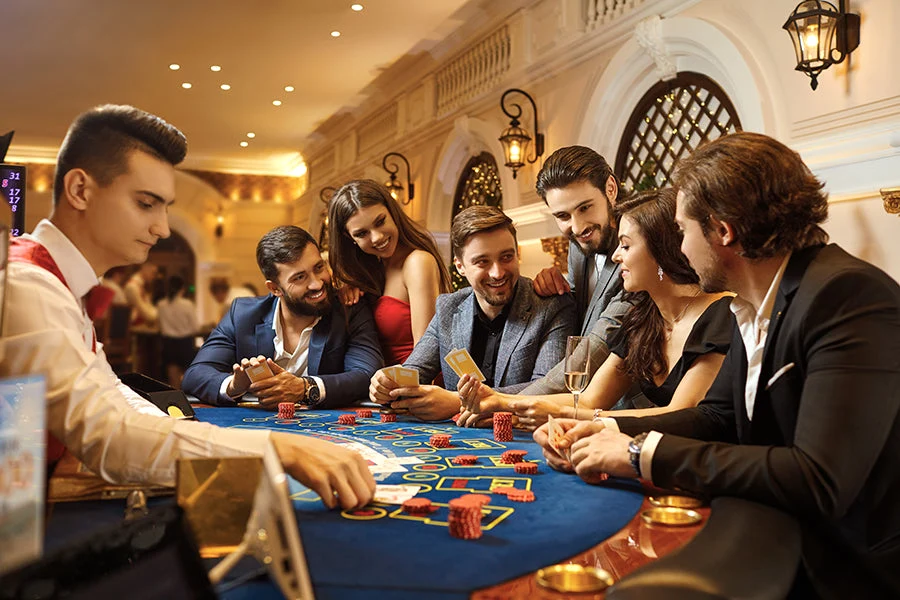
In contemporary society, gambling serves a similar social function, albeit in a secularized form. Whether gathering around a craps table in a bustling resort, participating in an office tournament bracket, or playing poker with friends, wagering provides a shared emotional experience. It creates instant camaraderie, bridges social divides, and offers a structured environment for human interaction. The collective tension and release experienced during a game foster bonds that go far beyond the monetary exchange taking place on the table.
Balancing the Thrill with Rational Self-Awareness
Understanding that humans are hardwired for risk does not excuse reckless financial behavior or ignore the real dangers of problem gambling. The same neurochemical pathways that made risk-taking a successful survival strategy in the prehistoric wilderness can become destructive in a modern world saturated with easy access to high-speed wagering platforms.
True wisdom regarding risk lies in self-awareness and intentional boundaries. By recognizing that the urge to gamble is a natural product of evolutionary wiring and philosophical yearnings for agency, individuals can approach games of chance with clear perspective. Treating gambling strictly as a form of paid entertainment rather than an investment strategy allows people to enjoy the psychological thrill of uncertainty while safeguarding their financial and emotional well-being.
Frequently Asked Questions
Why do near-misses in gambling feel more motivating than outright losses?
A near-miss occurs when a player comes remarkably close to winning, such as landing two matching slot symbols with the third just off the line. Psychological research shows that near-misses activate the same reward centers in the brain as actual wins, tricking the mind into believing that success is just around the corner and encouraging continued play.
How do different cultures perceive the boundary between skill and luck in wagering?
Cultural perspectives heavily influence how games are viewed. Some cultures historically embrace games of pure chance as spiritual communications with fate, while others place immense cultural value on skill-based card and tile games where strategic mastery dominates the final outcome.
Can the human brain be trained to overcome cognitive biases related to probability?
While formal education in statistics and probability helps individuals recognize logical fallacies, deep-seated cognitive biases are evolutionary shortcuts hardwired into human psychology. Even trained mathematicians and scientists can fall prey to emotional decision-making when facing high-stakes uncertainty.
What is the psychological difference between financial investing and gambling?
While both involve risking capital on uncertain future outcomes, investing is theoretically grounded in productive economic value creation, asset growth, and fundamental business performance over time. Gambling, by contrast, is a zero-sum game structured around fixed mathematical probabilities where the house or organizer maintains a built-in statistical advantage.
Why do losses sting more emotionally than equivalent wins feel rewarding?
This phenomenon is known in behavioral economics as loss aversion. Psychologically, the pain of losing a specific amount of money is roughly twice as intense as the psychological pleasure of gaining that exact same amount, which often drives players to make irrational bets trying to recover lost funds.
How does the availability of digital mobile gambling alter human risk perception?
Mobile platforms remove physical friction and social barriers, allowing instant wagers at any time of day. This constant accessibility isolates the decision-making process, reducing the conscious reflection that typically occurs when physically visiting a traditional gaming establishment.
What philosophical role does fatalism play in historical attitudes toward games of chance?
Many ancient philosophies and religious traditions viewed the outcomes of dice and lotteries not as random mathematical events, but as direct expressions of divine will or destiny. Playing these games was often seen as a way of surrendering human agency to higher cosmic forces.